

Is a solar battery worth it in Victoria?

Julian, owner of Bright HelpLast checked 22 October 2026
Our battery in Torquay should pay back in about nine years, at a house that uses three times the electricity it did in 2022. At yours, it comes down to how much of your solar goes back to the grid, and what your plan charges for power in the evening.
If a battery would take longer to pay back than its warranty lasts, ten years for most, I’d hold off: you’d be betting it keeps working after the warranty ends.
What decides it at your house
A battery earns its keep by moving power from the middle of the day into the evening. Solar you send back to the grid earns very little now, about 1c a kWh on our plan, and power you buy in the evening costs many times that. Every kWh the battery moves is worth the gap between the two.
So two things tell you most of it.
- How much solar you send back. Your bill shows it as solar exported, or as a feed-in credit. If it’s small, a battery has little to fill up on, unless your plan has free hours to fill it from the grid.
- How much power you use in the evening, and what it costs you. A house that uses most of its power after dark, on a plan that charges a lot for it then, has the most to gain. On a time-of-use plan the bill splits it out; on a flat rate it’s in your smart meter’s data, and the energy plans page says how to see it for free.
Free hours change the picture. Since 1 October, most Victorian retailers have to offer the Midday Power Saver, with power at no cost from 11am to 2pm, and on a plan like that a battery can fill from the grid on a cloudy day as well as from the panels. That’s how ours runs: we buy almost all our power in those three hours, and the battery carries the rest.
How long does a battery take to pay for itself?
Ours should take about nine years. I’m an engineer, so I built a model of our house from our own smart meter data, every half hour: how much power we use and when, how much of what we buy from the grid the battery would replace, and how fast power prices rise. Nothing since the battery went in is a full year yet.
The warranty is the yardstick. Most batteries carry ten years, so one that takes longer than that to pay back is a bet that it outlives its warranty.
Should I rush to get a battery before the rebate drops?
Only if a battery already makes sense at your house. The federal rebate steps down every six months until it ends in 2030, so there’s always another drop coming. The next is on 1 January 2027, when the same battery gets about a sixth less (the Clean Energy Regulator’s table).
The rebate you get is set by the day the battery’s installed, not the day you sign. So if a quote comes with a deadline, ask what happens to the price if the install slips into January, and check what to look for in a quote before you sign. Whatever the date, the question is the one above: will it pay back inside its warranty at your house?
What ours shows
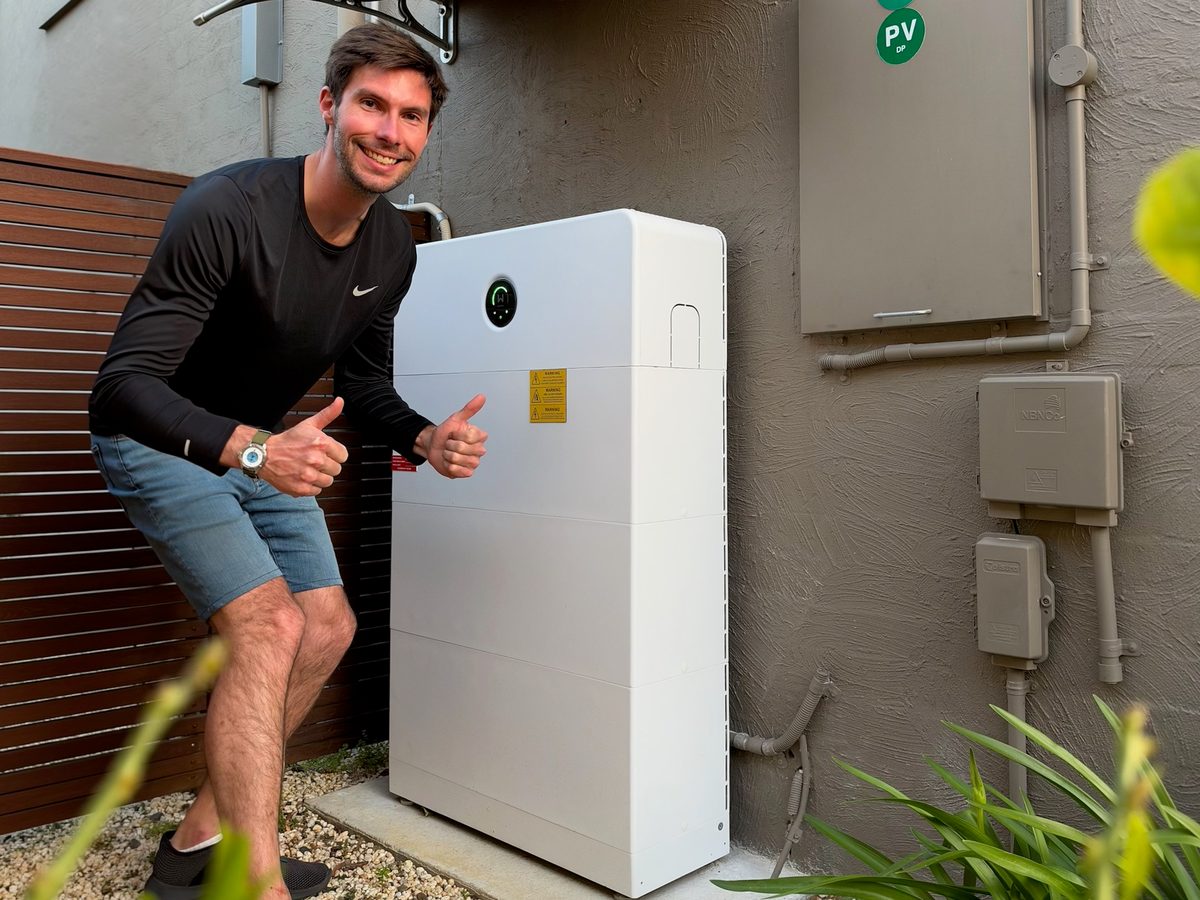
The battery was commissioned on 7 July 2026, and for nearly seven weeks it was set up wrong: some of the power coming out of the battery went through the meter, and the meter counted it as power we’d bought from the grid. Electricity was costing us between $1 and $3 a day. Since 23 August, when the set-up was fixed, it’s been between 2c and $1 a day.
Mistakes like that happen when a brand is new to the installers, or the meter is one they rarely see, and it’s the household that pays for them unless someone catches it. That’s why I look at the set-up as closely as the battery.
When the answer is no
At one house I visited in September, moving their evening power onto cheap midday power was worth $370 to $620 a year. A battery there would have cost about $10,000 installed, so 16 years or more to pay back, well past a ten-year warranty. My advice was not yet: sort out the pool heater, which had been pushing their numbers up, and look again with a few months of better data.
Where I come in
You can get a long way with your bill and the two things above. What a visit adds is what a bill can’t show: where a battery would go, whether your switchboard and inverter suit one, what size suits your evenings, and a set-up that suits your plan from the first day.
If you already have a quote, I’ll read it before I come, as part of the consult. Nobody pays me a commission, so I’ll tell you either way.